
Full project name:
Computational design of high-performance ferroelectrics
Project Details
Modern dielectric materials with exceptional electromechanical response are based on perovskite solid solutions in the composition range of the morphotropic phase boundary (MPB). Despite their critical importance for advanced applications, the explanation of their performance is elusive, as it is hard to access the real short-range atomic order experimentally and accurate calculations of finite-temperature properties with current models are challenging. We propose a comprehensive approach combining multiscale modelling and experiment. We engage first-principle techniques to design interatomic potentials fine-tuned for the atomic order in MPBs, which will be determined experimentally using the recently developed anomalous diffuse scattering method. Molecular-dynamics simulations of large enough structures will provide direct insight into the local structure-property relationship. Potentials for various cation species will enable to develop a high-throughput screening scheme and design of new, environmentally-friendly materials. The best candidates will be synthesized and characterized.
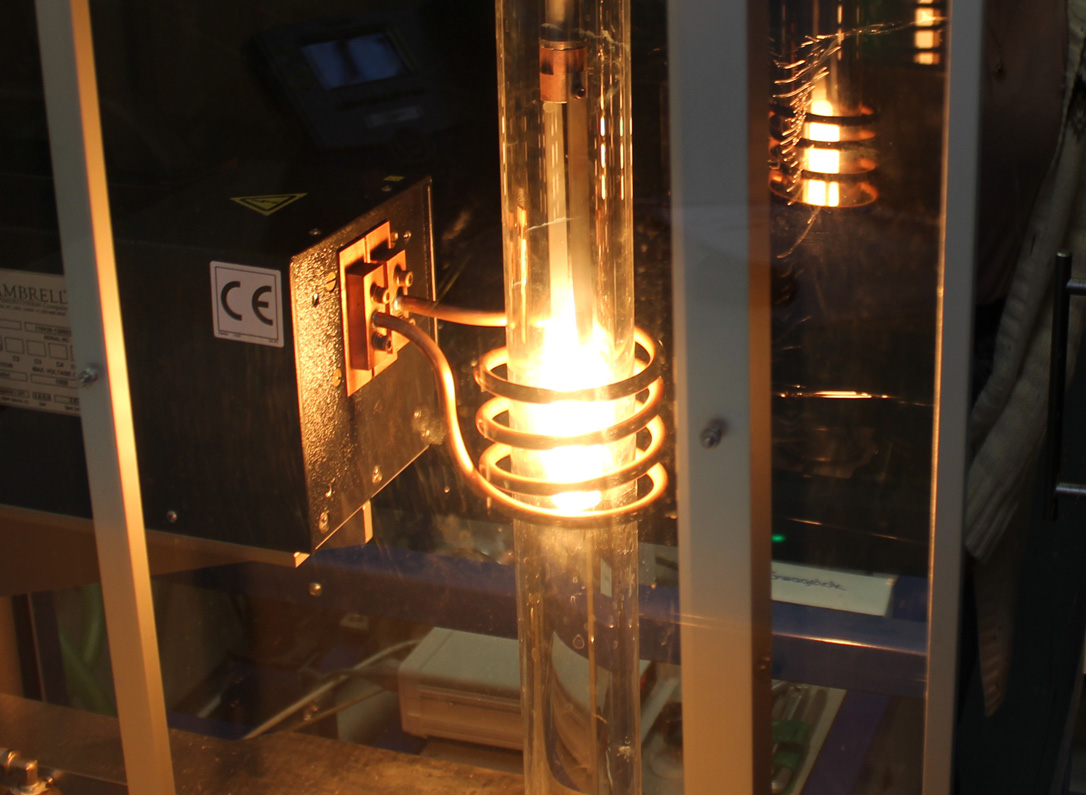
-
Principal Investigator
Dr. Milan Klicpera -
Team
2 senior researcher, 1 PhD, 2 students -
Duration
2024 - 2026 -
Research area
Ferroelectrics; Morphotropic-phase-boundary; Electromechanical-response

Dr. Milan Klicpera
Principle investigator
Current position: associate professor at the Department of Condensed Matter Physics, Faculty of Mathematics and Physics, Charles University.
Main field: magnetism in condensed matter, energy excitations, low temperature physics
Fields of interest and expertise: condensed matter physics, macroscopic and microscopic properties of rare-earth-based intermetallic compounds, preparation of polycrystalline and single crystalline samples, magnetic structures and crystal field excitations, neutron scattering techniques.
Role of MGML in the Project
MGML instruments are employed for sample synthesis, especially single-crystal growth, preparation (orientation and cutting) and characterization by X-ray diffraction, electron microscopy, XRF, and specific heat.