
News
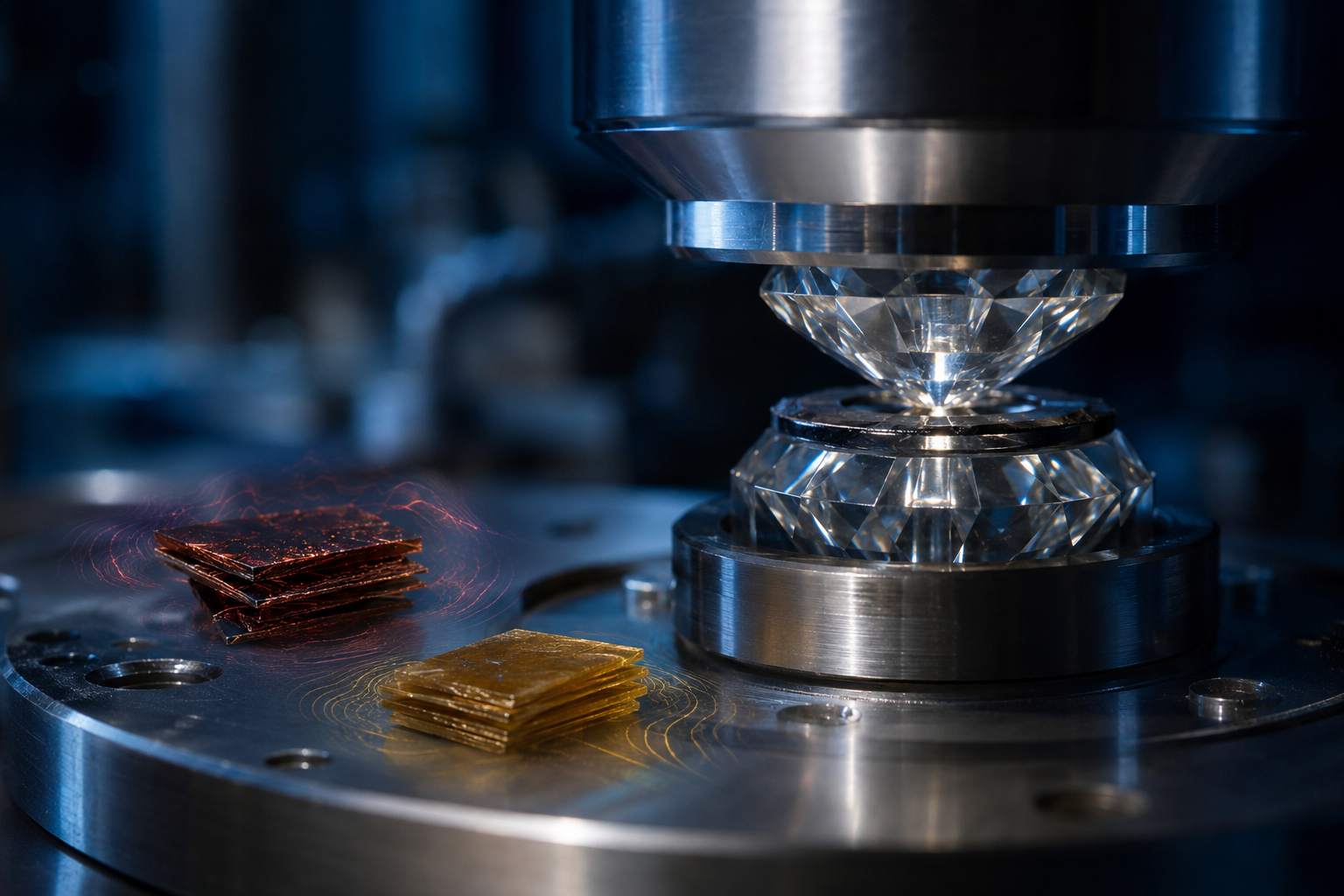
Researchers from the Materials Growth and Measurement Laboratory (MGML) have published two Communications Materials papers supported by the GAČR Q-MAG project 25-15448S and featured in the Nature Collection “Condensed Matter Physics at High Pressure.” Combining crystal growth, high-pressure experiments, advanced characterization, spectroscopy, diffraction, and theoretical modelling, the studies reveal mechanisms governing pressure-tunable magnetism in van der Waals materials. They also highlight the successful collaboration between Charles University and the Institute of Physics of the Czech Academy of Sciences.
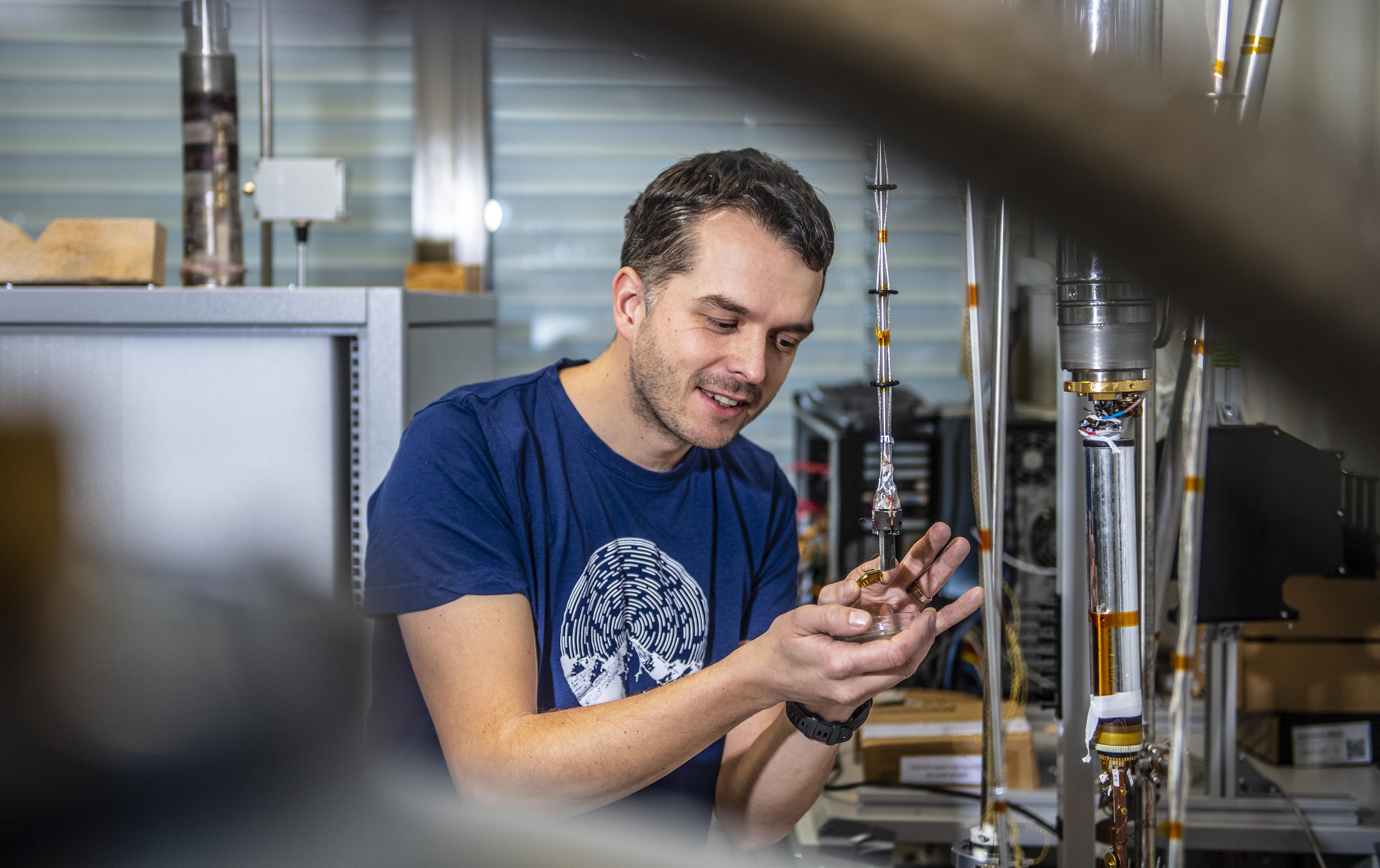
Research supported by the MGML has contributed to major recognition of excellence in quantum materials science. Michal Vališka has received both the Neuron Award for promising scientists and the prestigious Junior Star grant, highlighting the impact of advanced experimental infrastructure on cutting-edge research.
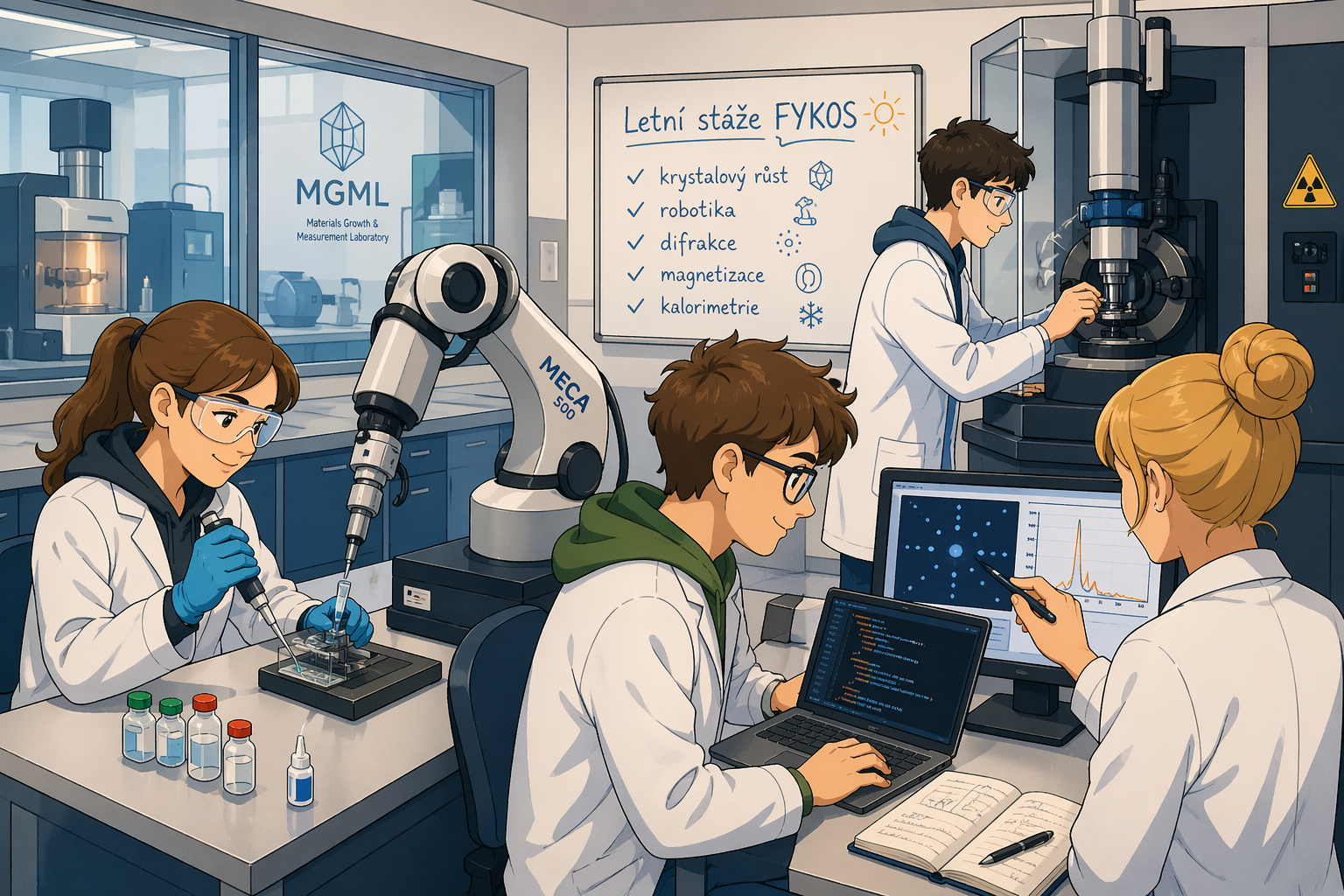
Within the FYKOS “Letní stáže” programme, motivated high-school students engaged in hands-on research projects at the Materials Growth & Measurement Laboratory. The internships provided direct experience with advanced instrumentation and modern experimental methods in condensed matter physics.
The UAAT–ICU Workshop held in Prague brought together leading institutions from Taiwan and the Czech Republic to strengthen collaboration in advanced materials research and next-generation technologies. The event highlighted shared scientific priorities and showcased the capabilities of Czech research infrastructures in supporting cutting-edge international projects.
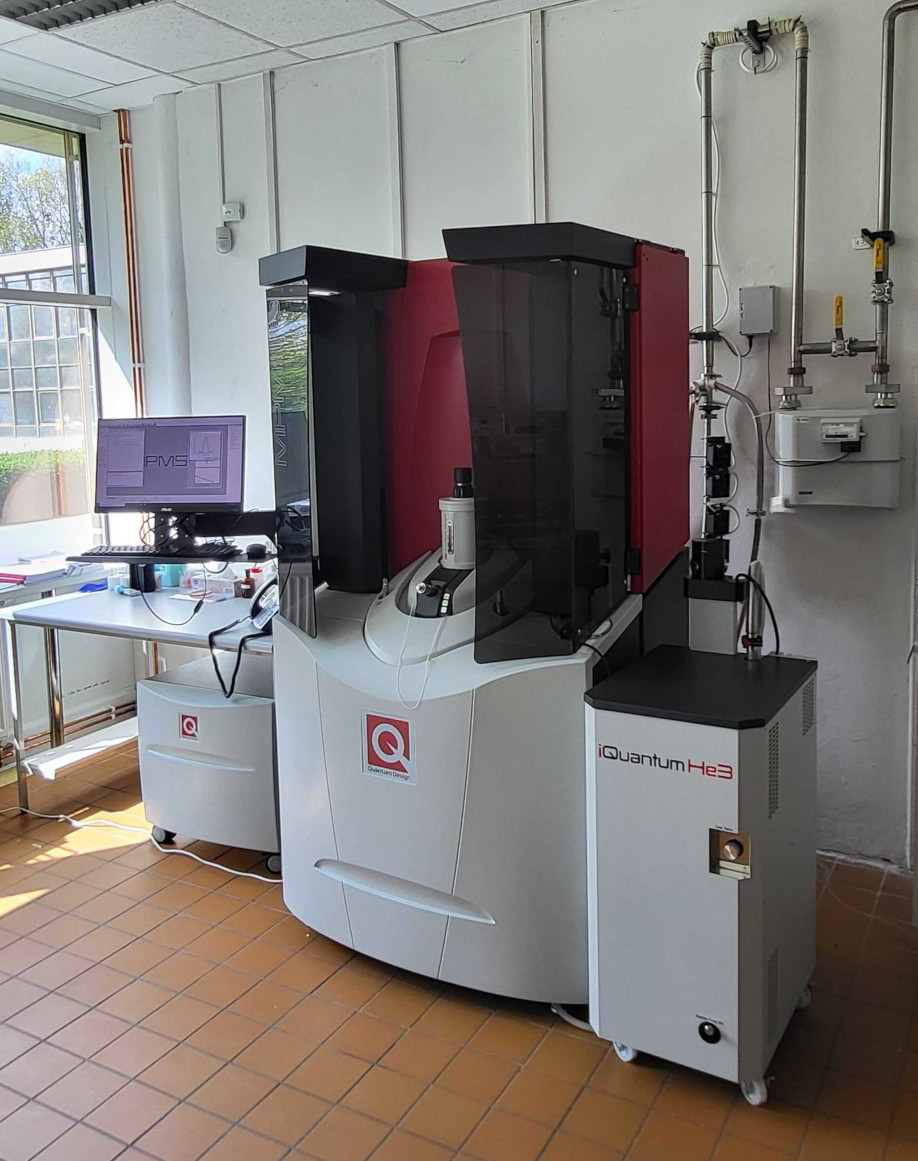
The Materials Growth and Measurement Laboratory has expanded its experimental capabilities with the acquisition of a new SQUID-based magnetometer (MPMS3). This advanced instrument enables highly sensitive magnetic measurements under extreme conditions, supporting cutting-edge research in condensed matter physics and multifunctional materials.
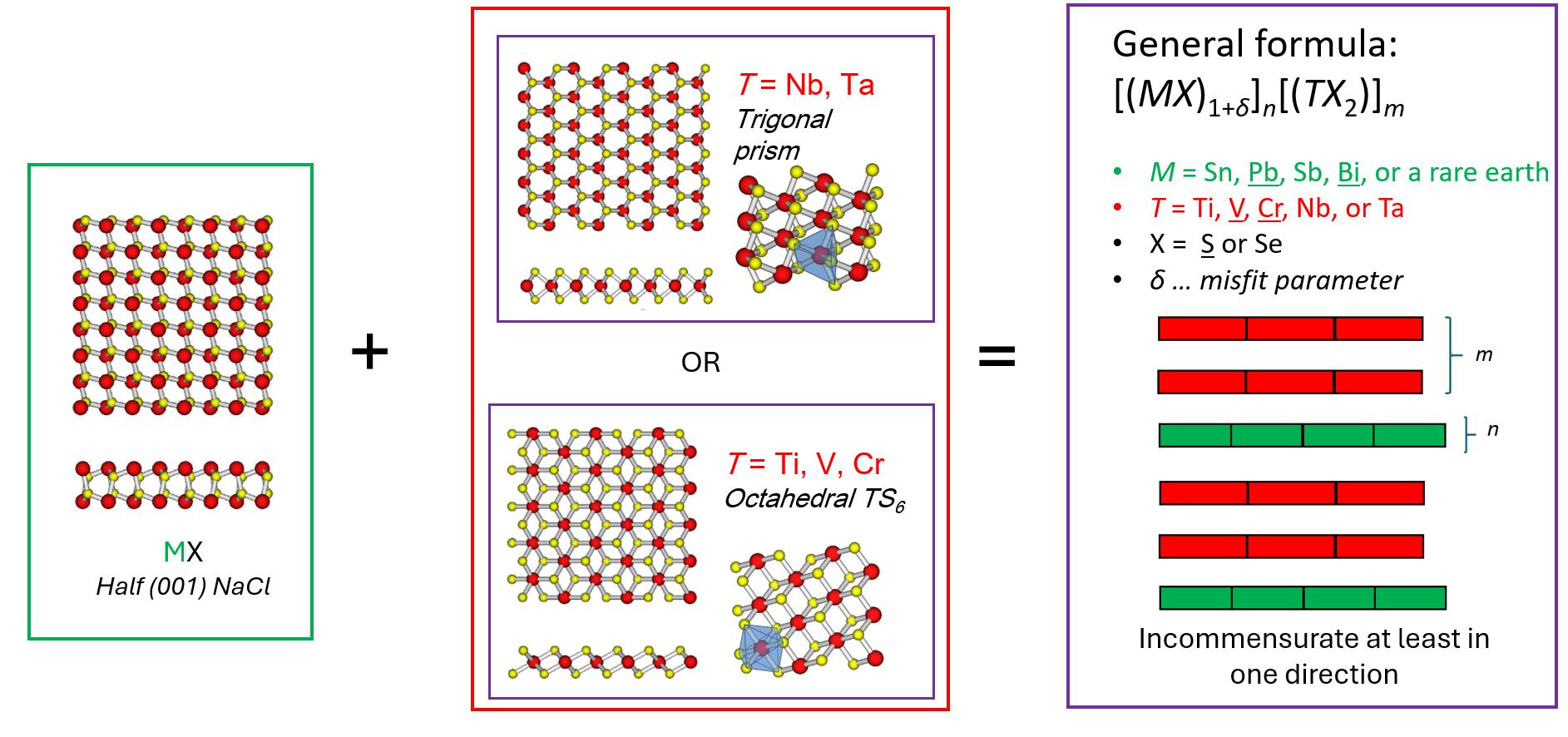
A recent breakthrough demonstrates moiré ferroelectricity in naturally occurring misfit layered compounds, opening new directions for studying ferroelectric phenomena in clean, bulk single crystals. This discovery, originating from student research, highlights the role of advanced instrumentation in uncovering emergent properties of complex materials.