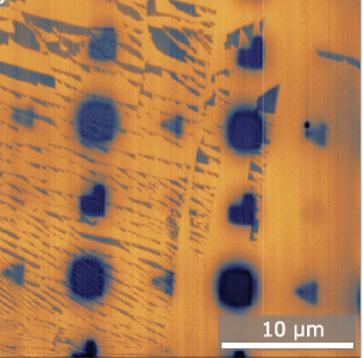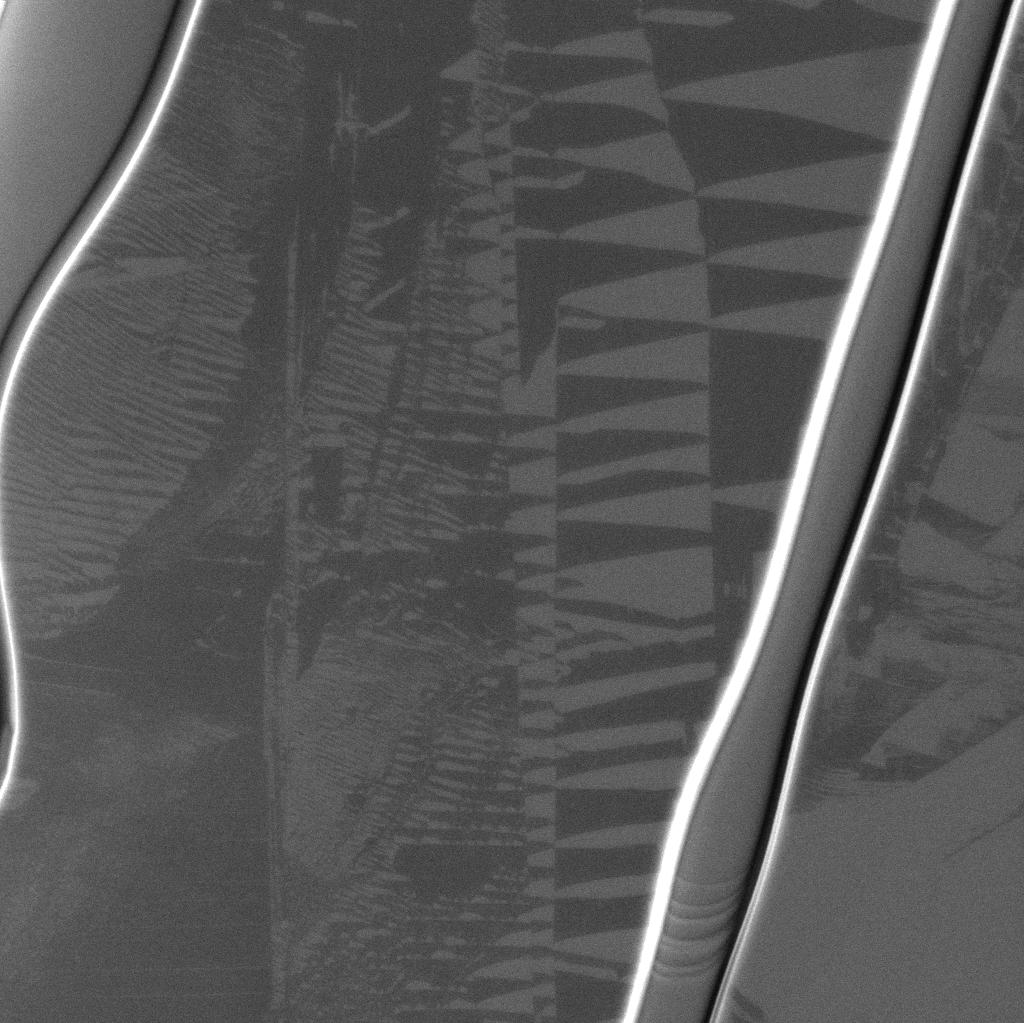
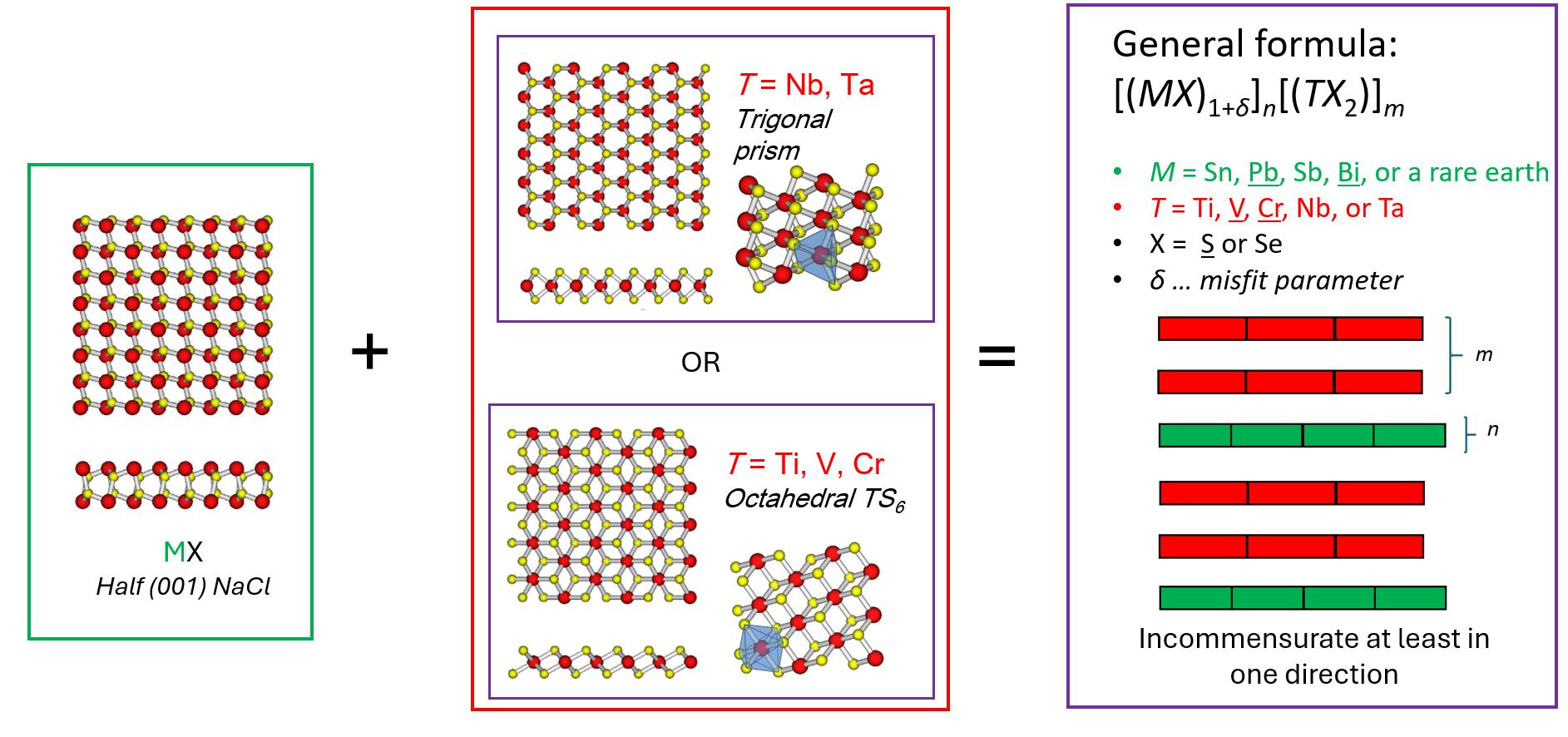
Researchers from the groups of Klára Uhlířová and Tim Verhagen have reported the first observation of moiré ferroelectricity in single crystals of chalcogenides with incommensurate crystal structures, specifically in the model compound (PbS)1.11VS2. Although this material is non-polar in its stable bulk form, structural defects and twin domains give rise to polar interfaces that extend throughout the crystal. The phenomenon was initially identified during bachelor-level research and subsequently confirmed through detailed structural characterization and advanced experimental techniques. Local polarizability was first demonstrated using piezoresponse force microscopy, while later studies employed nanofabrication approaches such as electron beam lithography to further probe the material’s behavior. These investigations also revealed links between polar domain orientation and catalytic activity. Ongoing work continues to explore the electrical transport and other physical properties of these systems. A key advantage of this discovery lies in the ability to study ferroelectricity in naturally grown single crystals with intrinsically clean interfaces, avoiding the complexity of artificially engineered heterostructures.
Moiré sliding ferroelectricity is a recently discovered phenomenon in van der Waals materials, where a relative displacement or rotation between weakly bonded layers produces long-range moiré patterns. These patterns, widely known from optical systems, can fundamentally alter the electronic and structural properties of materials when formed at small twist angles. First predicted theoretically and later confirmed experimentally in artificial heterostructures, moiré ferroelectricity provides a pathway toward designing multiferroic systems with unconventional properties, including ferroelectric-like behavior in metallic materials and anomalous piezoelectric responses. Because van der Waals layers—such as those found in graphite or graphene—can be easily stacked and rotated, moiré engineering has become a powerful tool in modern materials science. The realization of this effect in naturally occurring misfit layered compounds significantly broadens its applicability and creates new opportunities for fundamental research and future device concepts.